
Enough is enough. RSPCA South Australia is calling for a phase out of greyhound racing.
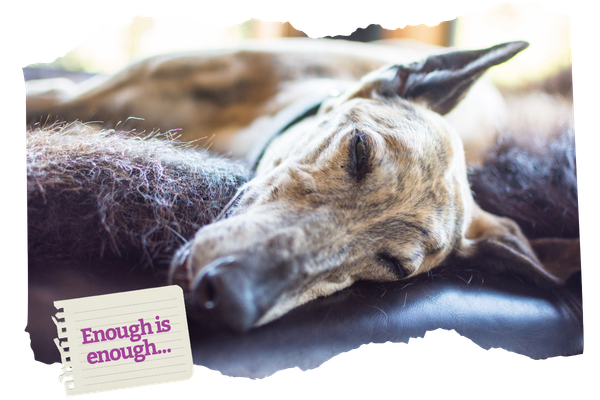
RSPCA South Australia is calling for a managed phase out of greyhound racing because the evidence is now overwhelming: the welfare issues in this industry are systemic, persistent, and unable to be resolved through reform alone.
After years of inquiries, promises, and partial improvements, the same problems continue to surface – high injury rates, poor transparency, and a lack of accountability for what happens to dogs before, during, and after their racing careers.
At its core, greyhound racing simply cannot guarantee an acceptable standard of animal welfare, and that’s why it’s time for responsible, planned transition away from the industry.
A managed phase out is not only justified, it is necessary.
Even with the most well‑intentioned reforms, the fundamental nature of greyhound racing makes it unsafe. Dogs run at extreme speeds, in tight packs, on curved tracks that increase the likelihood of collisions. Even straight tracks still cause catastrophic injuries, with 1 year old, ‘Roxby to Yorkes’, the first (published) dog to die on an SA track this year. He was catastrophically injured on a straight track at Murray Bridge in March.
These conditions make major injuries – including catastrophic fractures – unavoidable. Every month in South Australia, racing greyhounds suffer life‑altering injuries on the track. As long as racing continues, so will the deaths and suffering.
Beyond the track, the problems continue. Overbreeding remains a major issue, fuelled by incentives that encourage producing more dogs than the industry can responsibly rehome.
Without comprehensive birth‑to‑death tracking, there is no clear visibility of what happens to many greyhounds once they leave the racing system. The limited data that is collected is often incomplete, inconsistently reported, or withheld from the public. This lack of transparency erodes trust and makes genuine welfare oversight impossible.
Even states with independent regulators – such as NSW and Queensland – continue to record unacceptable injury and death rates, inadequate housing conditions, inability to safely rehome all retired dogs and ongoing welfare breaches. If independent oversight cannot fix these issues elsewhere, there is little reason to believe it would succeed in South Australia.
Welfare isn’t guaranteed.
Despite a multi‑year reform period, several basic welfare protections remain unimplemented. These include:
– Enforcement of minimum housing standards
– Adequate resourcing for welfare teams
– Enforcement of welfare policies for retired dogs
– Publicly accessible lifecycle traceability for every dog
– Veterinary presence at all race meetings
– Caps on breeding and interstate transfers
– Ongoing surveillance for serious welfare breaches such as live baiting.
If these measures were truly a priority, why weren’t they implemented years ago? How will progress be tracked? And how will the public know if welfare is genuinely improving?
The answer is increasingly clear: the industry has not demonstrated the transparency or accountability needed to maintain its social license.
Where to now?
Greyhound racing is not economically essential to South Australia. A managed phase out would protect dogs while supporting those in the industry through the transition.
Greyhounds don’t have a voice, but you do. Please write to decision‑makers and help build awareness.
You can also sign up to Changemakers to stay informed and be part of this important campaign.
Meaningful change is possible, but only if we choose it.
Rest In Peace – Is He Happy
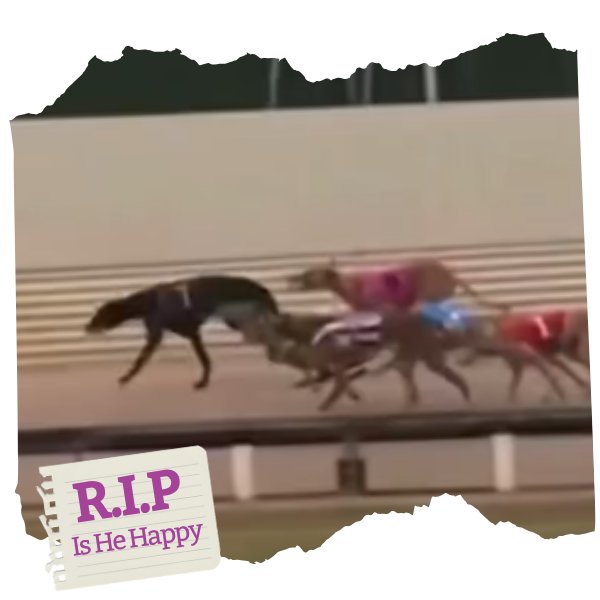
Image: Coalition for the Protection of Greyhounds
And then there are individual stories that cut through the statistics.
On May 7, Is He Happy lost his life at Mount Gambier raceway.
He was dragged down on the first turn and suffered what veterinarians described as “a complete open fracture of the radius and ulna.” His pain would have been extreme. He was euthanised shortly after.
Another life lost. Another dog whose final moments were spent in fear and agony.